
Does Spinal Decompression Work? A Realistic Look at Effectiveness, Benefits, and Risks
Does Spinal Decompression Work? A Realistic Look at Effectiveness, Benefits, and Risks
Table of contents:
1. Introduction
2. What Is Spinal Decompression Therapy?
3. How Does Spinal Decompression Work?
4. Conditions Spinal Decompression May Help
5. What Is the Success Rate of Spinal Decompression Therapy?
6. Is It Good to Decompress Your Spine?
7. What Are the Negative Effects of Spinal Decompression?
8. Do Doctors Recommend Spinal Decompression?
9. Spinal Decompression Therapy vs Surgery
10. Does Spinal Decompression Work Long-Term?
11. Frequently Asked Questions
Introduction
Chronic back pain can limit everything from daily movement to sleep quality. When traditional treatments like rest, medication, or physical therapy don’t provide enough relief, many people begin searching for alternatives. One treatment that often comes up is spinal decompression therapy. Naturally, the big question becomes: Does spinal decompression work?
The answer isn’t a simple yes or no. Spinal decompression can be effective for certain conditions, especially those involving disc pressure and nerve compression. However, outcomes depend on proper diagnosis, consistency, and realistic expectations.
This guide explains how spinal decompression works, who it helps most, potential downsides, and whether doctors actually recommend it.
What Is Spinal Decompression Therapy?
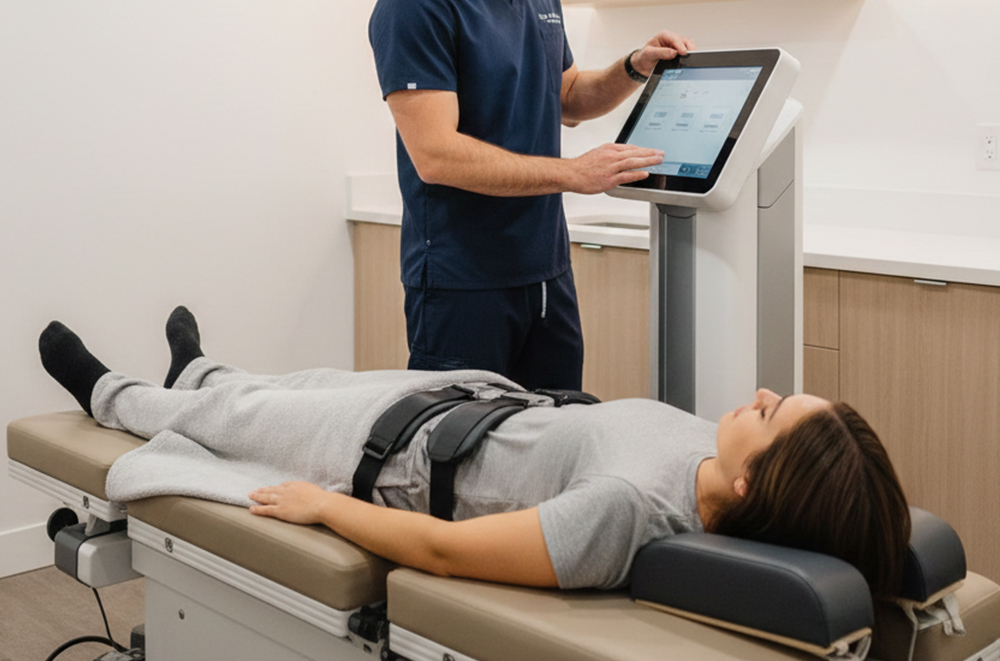
Spinal decompression therapy is a non-surgical treatment designed to relieve pressure on spinal discs and nerves. It uses a motorized spinal decompression table connected to a spinal decompression machine that gently stretches the spine in controlled cycles.
The goal is to create negative pressure inside the discs. This pressure change may:
Reduce disc bulging
Improve circulation
Relieve nerve compression
Support healing
Unlike general stretching, spinal decompression therapy is precisely calibrated based on your body weight and condition.
How Does Spinal Decompression Work?
To understand whether spinal decompression works, it helps to know what causes many types of back pain.
Between each vertebra sits a disc that absorbs shock and supports flexibility. Over time or due to injury, discs may bulge, herniate, or degenerate. When that happens, nearby nerves may become irritated or compressed, leading to:
Lower back pain
Sciatica
Tingling or numbness
Muscle weakness
Spinal decompression therapy gently stretches the spine to reduce that pressure.
During treatment:
You lie comfortably on a spinal decompression table.
A harness is placed around your hips or torso.
The spinal decompression machine slowly stretches and relaxes the spine.
Sessions typically last 20–45 minutes.
Because treatment is gradual and controlled, most patients experience little to no discomfort.
So, when asking does spinal decompression work, it’s really about whether reducing disc pressure will relieve your symptoms.
Conditions Spinal Decompression May Help
Spinal decompression therapy is commonly used for:
Herniated discs
Bulging discs
Degenerative disc disease
Sciatica
Chronic lower back pain
Neck pain
Some providers combine therapy with spinal decompression exercises to strengthen supporting muscles and improve long-term results.
If you’re searching for spinal decompression near me, it’s important to choose a provider who performs a thorough evaluation first.
What Is the Success Rate of Spinal Decompression Therapy?
Reported success rates vary widely. Some clinics claim improvement rates of 70–90% for selected patients. Research shows that many patients do experience meaningful pain relief, especially when therapy is combined with strengthening exercises and lifestyle changes.
However, spinal decompression therapy doesn’t work equally for everyone. Factors affecting success include:
Severity of disc damage
Duration of symptoms
Age and overall health
Consistency of treatment
Post-treatment exercise habits
So again, does spinal decompression work? Yes, for many, but not universally.
Is It Good to Decompress Your Spine?
For people with disc compression or nerve irritation, decompression can be beneficial. It may reduce pressure and improve mobility without surgery.
However, it isn’t recommended for people with:
Severe osteoporosis
Spinal fractures
Advanced spinal instability
Certain surgical implants
A licensed provider will determine whether you’re a candidate before starting therapy.
What Are the Negative Effects of Spinal Decompression?
Non-surgical spinal decompression therapy is generally considered safe, but some mild side effects may occur:
Temporary soreness
Muscle stiffness
Mild discomfort after sessions
Serious complications are rare with non-surgical therapy. However, spinal decompression surgery carries higher risks such as infection, nerve damage, or extended recovery time.
If symptoms worsen significantly, treatment should be reassessed.
Do Doctors Recommend Spinal Decompression?
Some chiropractors and spine specialists recommend spinal decompression therapy as part of a broader treatment plan. A chiropractor in West Des Moines may suggest it when disc pressure is clearly contributing to symptoms.
Medical doctors sometimes recommend trying conservative treatments like physical therapy first. Surgery is usually reserved for severe or persistent nerve compression.
If you’re looking for a chiropractor near me who offers spinal decompression therapy, ask about their evaluation process and expected outcomes.
Spinal Decompression Therapy vs Surgery
It’s important not to confuse therapy with spinal decompression surgery.
Non-Surgical Therapy:
Uses a spinal decompression table
No incisions
Minimal downtime
Performed in outpatient clinics
Surgical Decompression:
Removes bone or disc material
Requires anesthesia
Involves recovery time
Used only for severe cases
Most providers recommend non-surgical options before considering surgery.
Does Spinal Decompression Work Long-Term?
Long-term relief depends on more than treatment alone.
To maintain results, patients often need:
Core strengthening
Good posture habits
Regular movement
Weight management
Continued spinal decompression exercises
Without lifestyle changes, symptoms may return.
Frequently Asked Questions
Is it good to decompress your spine?
For people with disc-related nerve compression, decompression may reduce pain and improve mobility when recommended by a professional.
What is the success rate of spinal decompression therapy?
Success rates vary, often between 70–90% in carefully selected patients, especially when combined with strengthening exercises.
What are the negative effects of spinal decompression?
Most side effects are mild and temporary, such as soreness or stiffness. Serious complications are rare in non-surgical therapy.
Do doctors recommend spinal decompression?
Some doctors and chiropractors recommend it for disc-related pain when conservative treatments are appropriate.


MAP

Contact Info
Hours of Operation
- Monday 8:00 AM - 6:00 PM
- Tuesday 2:00 PM - 6:00 PM
- Wednesday 8:00 AM - 4:00 PM
- Thursday 2:00 PM - 6:00 PM
- Friday 7:00 AM - 1:00 PM
- Saturday Closed
- Sunday Closed
© 2026 Clement Chiropractic. All rights Reserved. Accessibility Statement - Privacy Policy - Sitemap
Powered by:
